
month in review: calçotada season is here
January is the month for wintering, for slowing down, for hunkering down under blankets with good books, and in Catalunya: it's for kicking off the calçotada season with the Gran Calçotada in Valls.

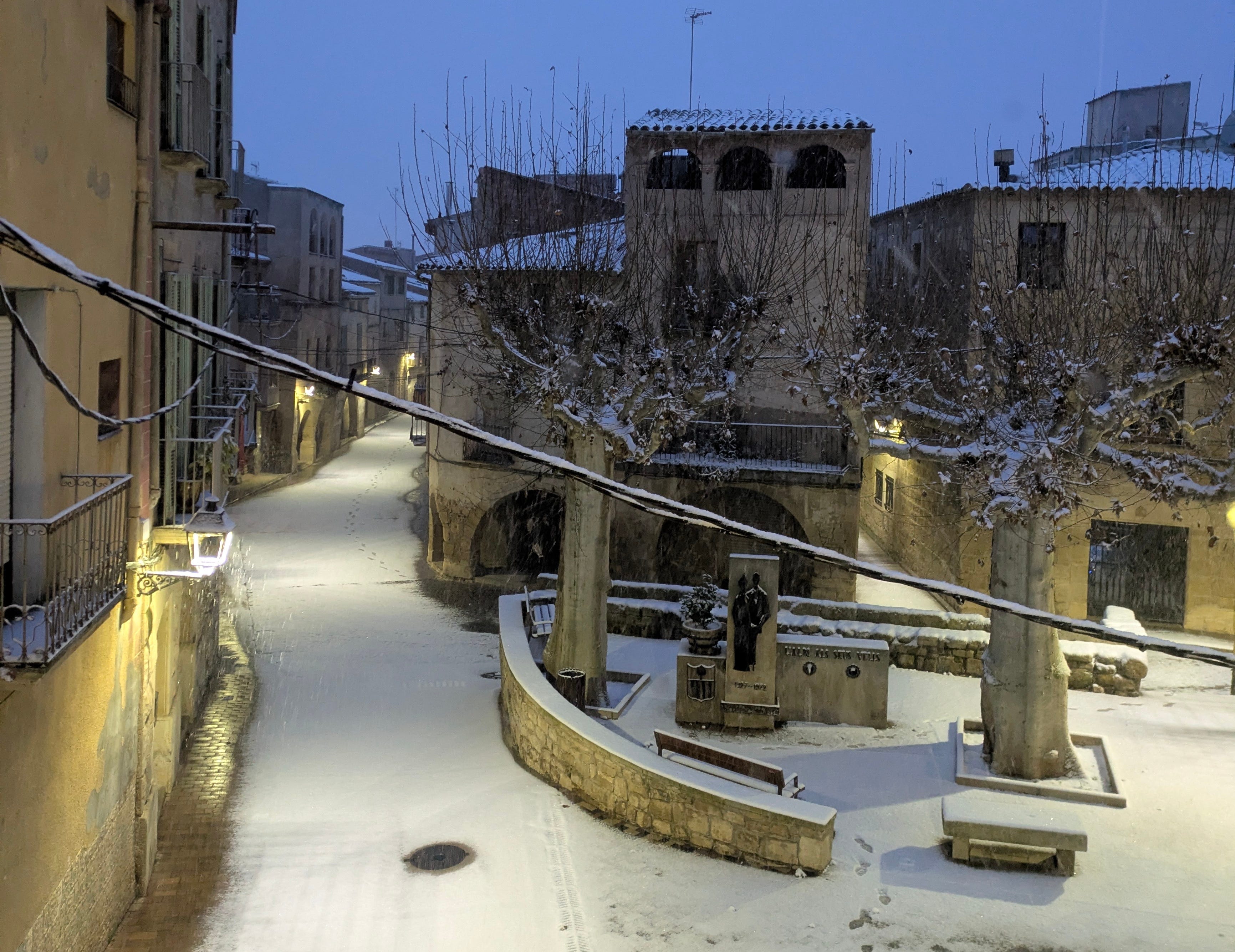
Well, here we are, at the end of the first month of the new year. I have to admit I spent a lot of time wintering: sad, slow, vacillating between feeling guilty and giving myself grace. I have never been a big “new year new me” person, winter is not the time for big plans and big energy after all. But this year, understandably, was slower than even my normal January speed. Between watching the horrors of America becoming a fascist state from afar, to working through a divorce and starting a life as a full time single mom, to continuing to try to find solutions to my daughter’s constant stomach pain and nausea, it’s just… it’s a lot all at once. We get up every day, we fight as long as we can, and then we give up for the day. Sometimes the fight lasts an hour. Sometimes we luchar longer through the day. Always we try to give ourselves grace and continue to move forward, even if it is by inches.
So thankfully, I had one thing on my calendar in January that I was excited about: the Gran Calçotada in Valls, Spain, the birthplace of the calçot. I missed learning about it by a single week last year, and the 2026 date has been on my calendar since then, determined to not miss this important kick-off to a culinary season in my region once again.
So I headed to Valls, a rough and revolutionary city, so of course it captured my heart. And I do love a calçotada, so it was great to experience the official, big one.
What is a calçotada, you ask? Well. Calçots are like giant green onions, that have dirt piled up around them as they grow to keep more of the stalk white. They get thrown on a fire of grape vines, which the farmers have just trimmed their vineyards, and are put on when the fire is still very hot, so they get a good char on them. Then they’re wrapped in newspaper or foil to steam. You eat them by stripping that charred out layer with your hands, a messy process indeed. The prepared calçot is then dipped in the calçot sauce, and eating all in one go. A proper calçotada starts with these calçots, and lots of them. Then once the fire has calmed down, you move on to the second course: meats. There has to be longanisa, a traditional sausage around here, but people throw all kinds of meat, and lots of it, on the grill for course two.


For our visit to the Gran Calçotada, I met my friend Jeanne and her husband Juan for the experience. We paid 15 euros for a bag with a dozen calçots, the sauce, half a loaf of rustic multigrain bread, a small bottle of water, a full size bottle of red wine, an orange and two little cookies. Then we wandered around in search of our longanisa, before watching Then it was time for the gegants parade- the giants! Every town has their “local couple” giants. Sometimes they’re dignitaries, saints, or former lords that owned the castle in town. I love that Valls’ couple were calçots farmers. Along with the obligatory local couple was a giant calçot trailed by all the little ingredients that make the sauce—like you do— and then a traveling maypole, traditional dancers, and a medieval horse. Each giant had their own little team of troubadours, playing traditional tunes on piccolos and drums. It was so joyful, and being an American I was in need of some joy.


Before leaving, we had to take in the calçots eating contest. We started watching these dozen or so contestants, eating calçot after calçot, and were wondering why they weren’t going faster. Can you not rush a Spaniard, even in an eating contest? Then we thought, well, maybe they are pacing themselves. Time went by, more and more confused, only to discover… the eating contest lasts for 45 minutes. Forty-Five Minutes, friends. Typically they eat 200-300 calçots in that 45 minutes.
Spaniards, man. They cannot be rushed. Especially at mealtime.
Spaniards are known for drawing out their meals- including a time after the meal, sitting around continuing to talk and enjoy each others’ company and wine or a coffee. It’s called sobremesa, and it’s so serious that restaurants will absolutely not bring you your check until you request it. To do so would be rude, rushing you. Now, Spaniards will meet to “tomar algo,” to get a drink- whether it’s a beer or a fancy cocktail or a coffee (and all three may be enjoyed at the same table by different people, thus the “algo,” the “something.”) When you meet to tomar algo, it may last only an hour or sometimes less, no worries. Getting a drink can be quick. A touchpoint to reconnect with friends that doesn’t require a big plan ahead to arrange it- but meals? Meals cannot be rushed. Slow down. Enjoy your food. Enjoy the company. Relax and sip your wine and remember that life has so much to be enjoyed without rush.
Learning to understand and enjoy the sobremesa concept is why I love spending time in other cultures. Someone new to Spain, a tourist from America, say, may be frustrated why the server isn’t bringing them their check so they can move on to the activity they have planned after the meal. But in Spain? The meal is the activity.
There’s a story of famous architect Gaudi’s representative being asked by a reporter if Gaudi was getting frustrated by the slow process of Sagrada Familia. There were wars and a dictator and all of this was interrupting work time and supply chains, and the Sagrada Familia had a series of years where they weren’t able to make much progress. But when asked if this frustrated its creator, his rep simply said, “No, no. My client is not in a hurry.”
Meals cannot be rushed. Creation cannot be rushed. Life–life cannot be rushed.
Even in a competition: Spaniards will not be rushed.
What a beautiful way to live.
But let me warn you: you have to give in to it, learn to enjoy its benefits-or else it will be highly frustrating. If you can’t adjust to the culture you are in, and understand the values behind the actions- they will confuse, annoy, and test your patience. You may even think they are “wrong” for doing it differently than you do. But I promise, stick around long enough, stay curious long enough, and you will uncover the value behind the action that makes it all make beautiful sense.
Missed a letter?
Last letter:
This week, you could also:
Catch up on Instagram: l’Artesania retreat center, the creative notebook, and me.
Plan a visit to L’Albi
Schedule a creative journaling workshop or plein air session with me
The other reality/difference around sobremesas related to Spain vs. the US around this is that waitstaff in Spain gets a salary and benefits which allows for people to linger. In the US if this was to happen waitstaff would never make any money or be able to pay their bills because of tip culture.